
Eroticism
Written by CLARKE ROSE / Scroll to explore
“Eroticism has its own secrets and I am trying to probe them now. Would that be possible without getting at the very core of existence?”
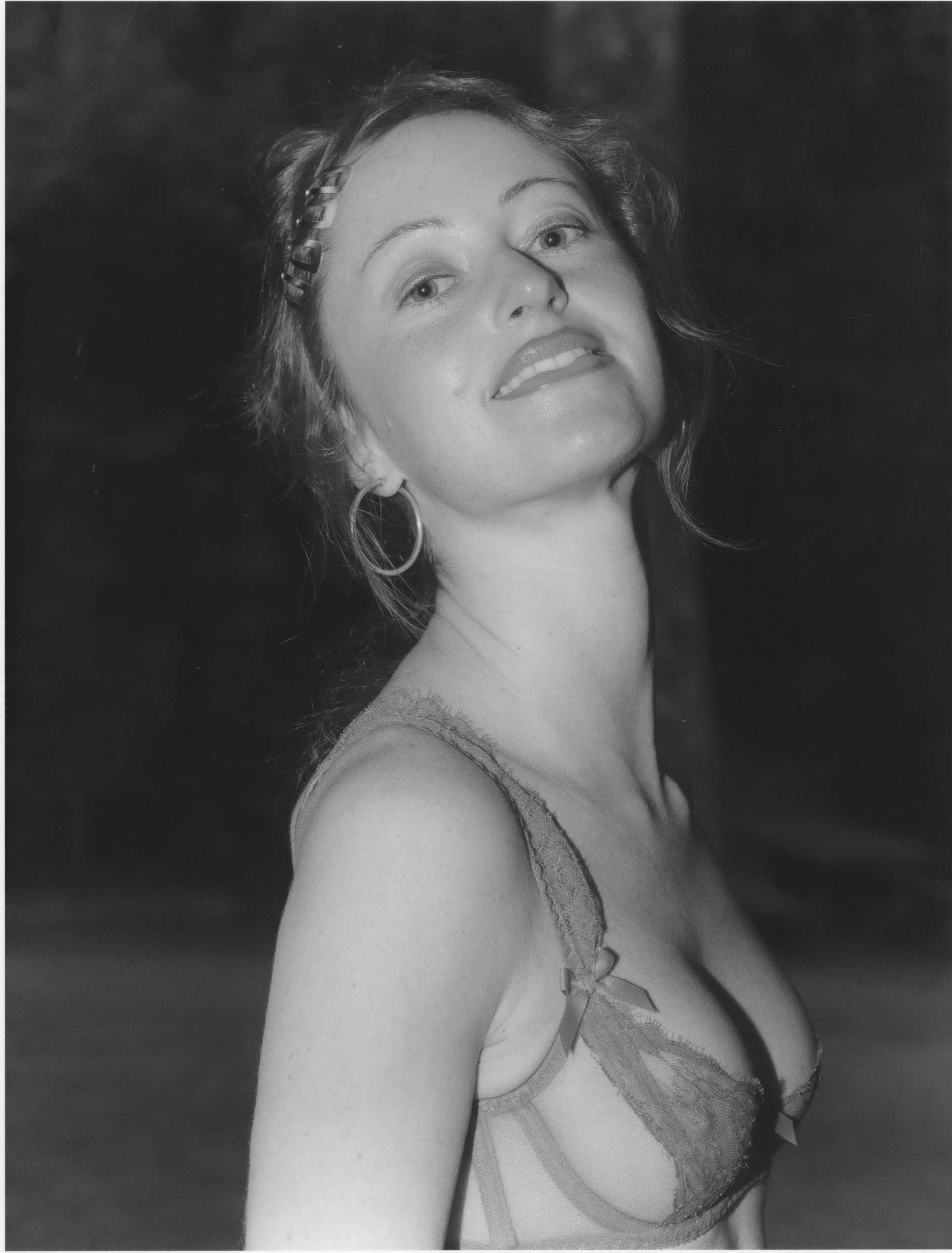
Photos by Kimberly Hunt
“Eroticism always entails a breaking down of established patterns, the patterns, I repeat, of the regulated social order basic to our discontinuous mode of existence as defined and separate individuals.”
— Georges Bataille, Death and Eroticism
As I hike Runyon Canyon, dressed in my 90s Nike low-rise sweats (hand-me-downs from my grandmother), a sports bra with a cropped tee tucked in, my pants hanging off my hips just how I like, I’m nothing but an animal on the prowl, searching for other animals on the prowl. Runyon is humming with erotic potential—she’s alive again, following a brutal burn, each week looking more and more green, more and more joyous. There are snakes and flowers and wind and sun and views of mansions and swimming pools. It’s hard not to feel the palpable allure of Hollywood in the air. All around me—hot people. Dressed in ways, like myself, which show off their hard-earned physiques. Beautiful, tan, shirtless men, sweat dripping from their harsh and sharply defined 6-pack abs. Gorgeous women with perfectly lined lips, matching athleisure made to draw attention to all the right places, walking with a confidence many will only dream of. After being on the hunt for a while, it begins to dawn on me, no eye contact or glances returned, surrounded by immense beauty in nature and people, that eroticism is so, so dead.
Eroticism is a cocktail of chaos and intention and the acknowledgement that to be alive is to be imperfect. To elucidate the innate humanness which plays a key role in the birth of eroticism—I recall a scene from Blue Is the Warmest Color, a French film by Abdellatif Kechiche. And no, not those sex scenes with prosthetic vulvas, shot from an undeniably male point of view, but the five-minute scene of Adèle Exarchopoulos eating pasta with her family, eating it and licking it and asking for more. Unapologetic in the way she enjoys her food—the French call this kind of appreciation “gourmandise”—a term which emphasizes the joy of food, to eat for the pleasure of eating. Gourmandise can even be hedonistic, eating more when you are full just because it’s that delicious. Americans deeply struggle with this concept. We get lost in the black and white of all, the rigidity, the eating to restrict or the eating to binge. The in-between, the space where we give into, even briefly, raw hedonism, without guilt, is a foreign concept. The way Adèle consumes her pasta is sensual, human, honest—all integral pieces of eroticism. Eroticism is not a performance but an experience. Being able to eat and enjoy food is sexy, and it is in moments of presently enjoying something, that we are present with ourselves. We build desire. We experience our senses. In a culture full of weight loss drugs, diets, and disordered eating, we are robbed of these sensual experiences.