Leaving Tom Ford
Written by Kimberly Hunt / Scroll to explore
for Fashion Freedom
From the hills of Tuscany to the classrooms of Central Saint Martins, Alessandro Francalanci has always charted his own course. Over a decade ago, he began his journey at the revered London institution, embracing the road less traveled from the very start. Leaving the polished floors of Tom Ford to forge his own path, Francalanci’s story is one of unyielding commitment to artistic freedom. “I’m a dreamer,” he confessed early in our conversation. “I want to make the dream real for others to dream the same way I dream. I almost feel guilty keeping dreams inside me.”
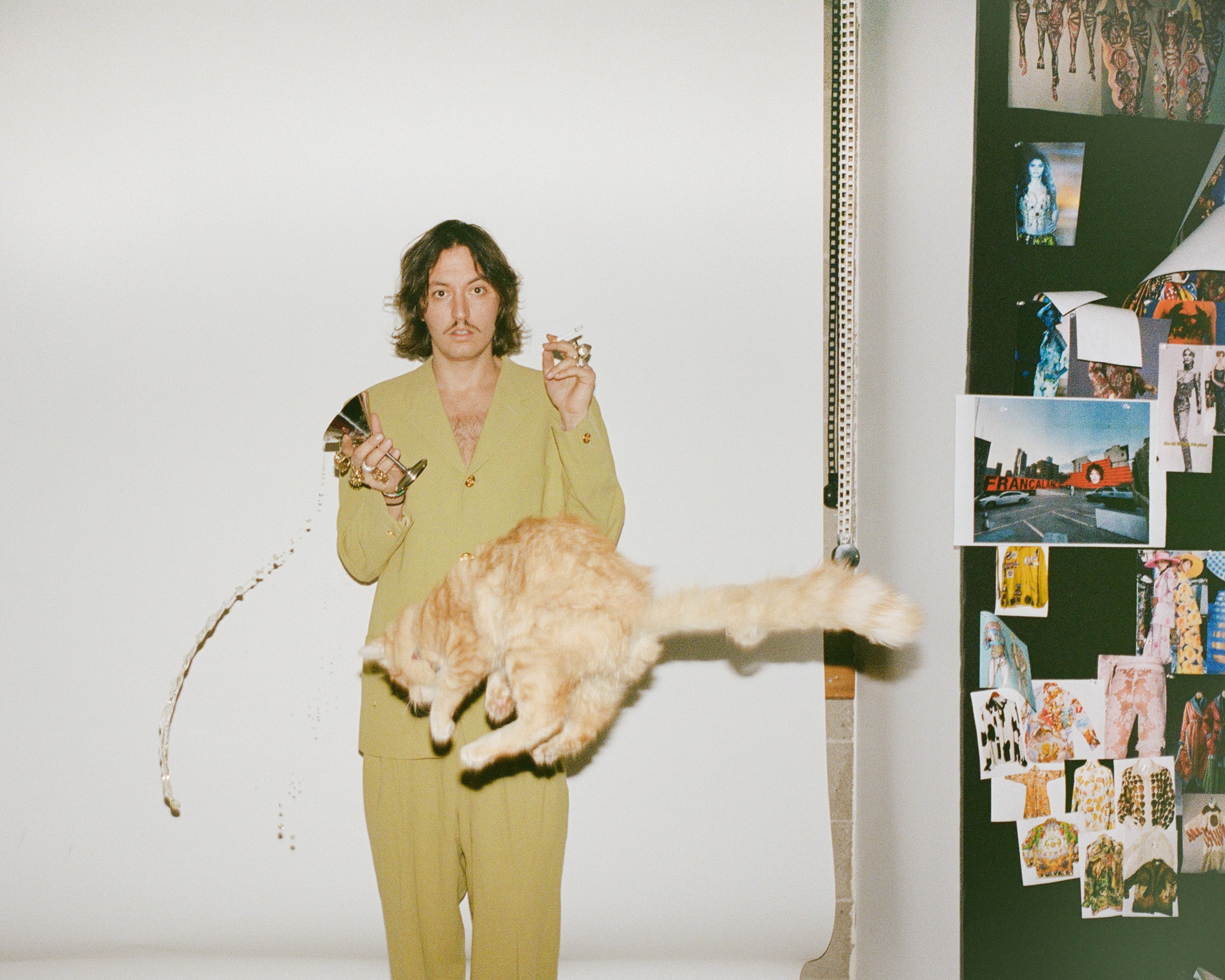
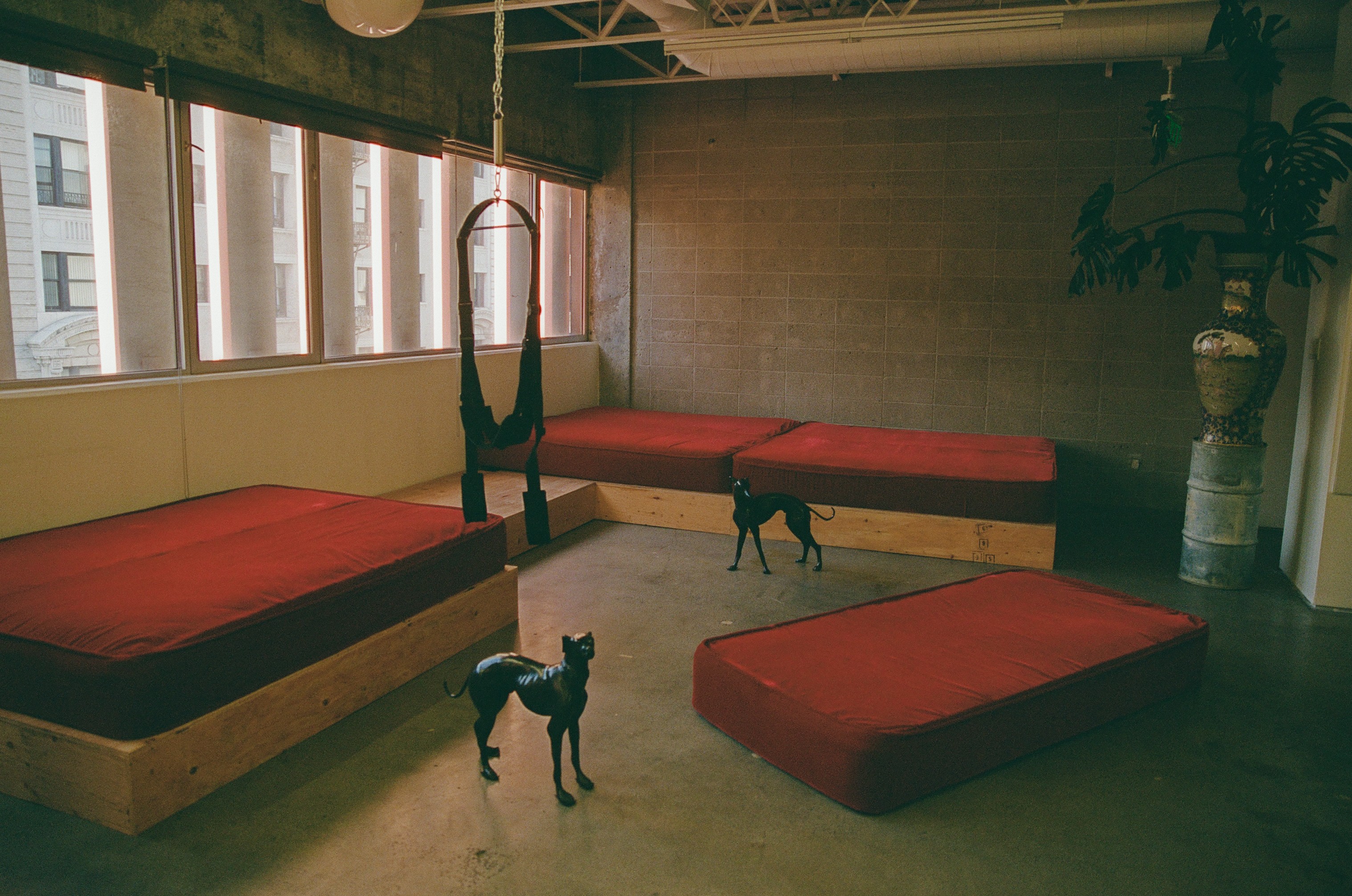
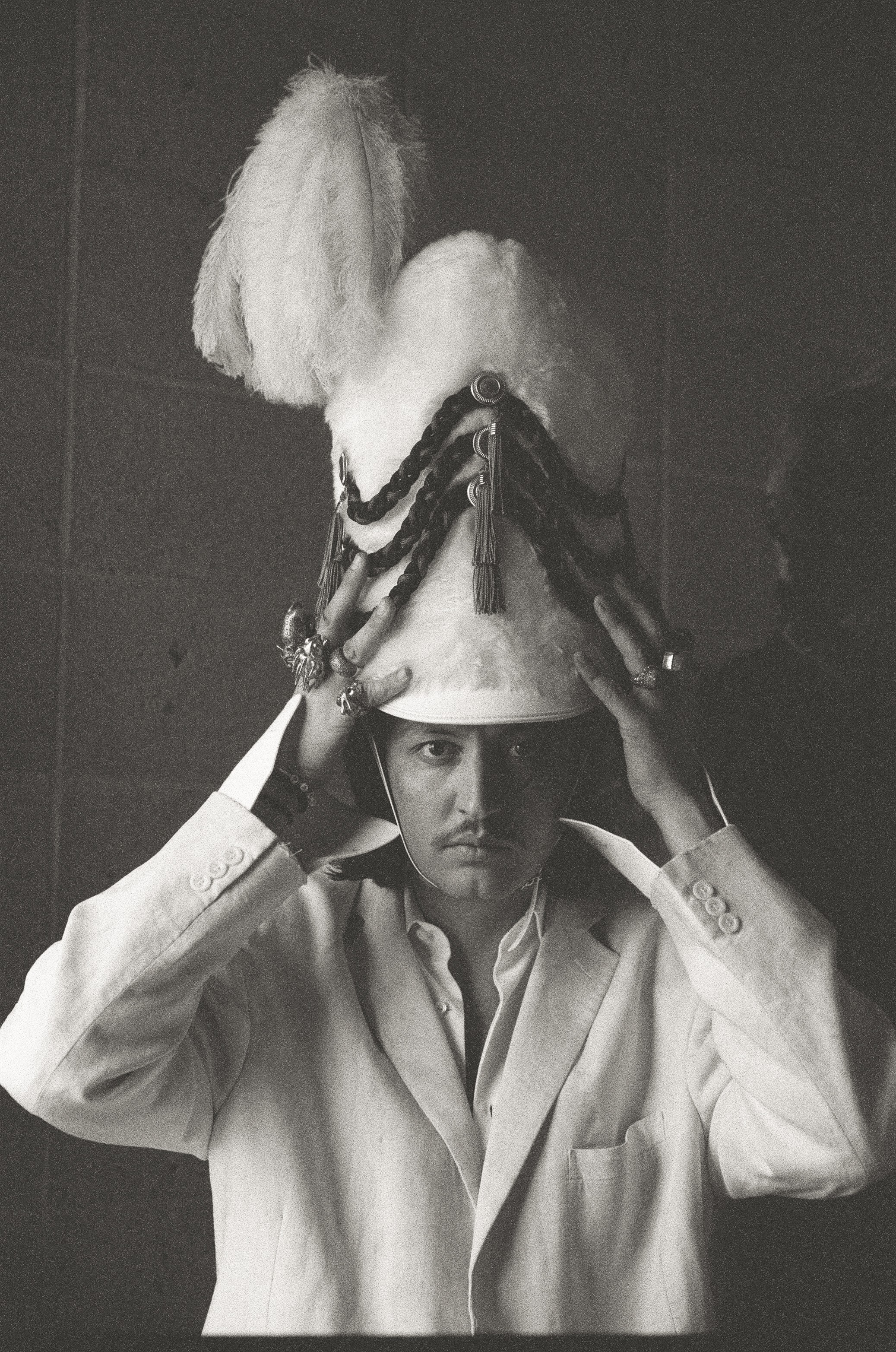
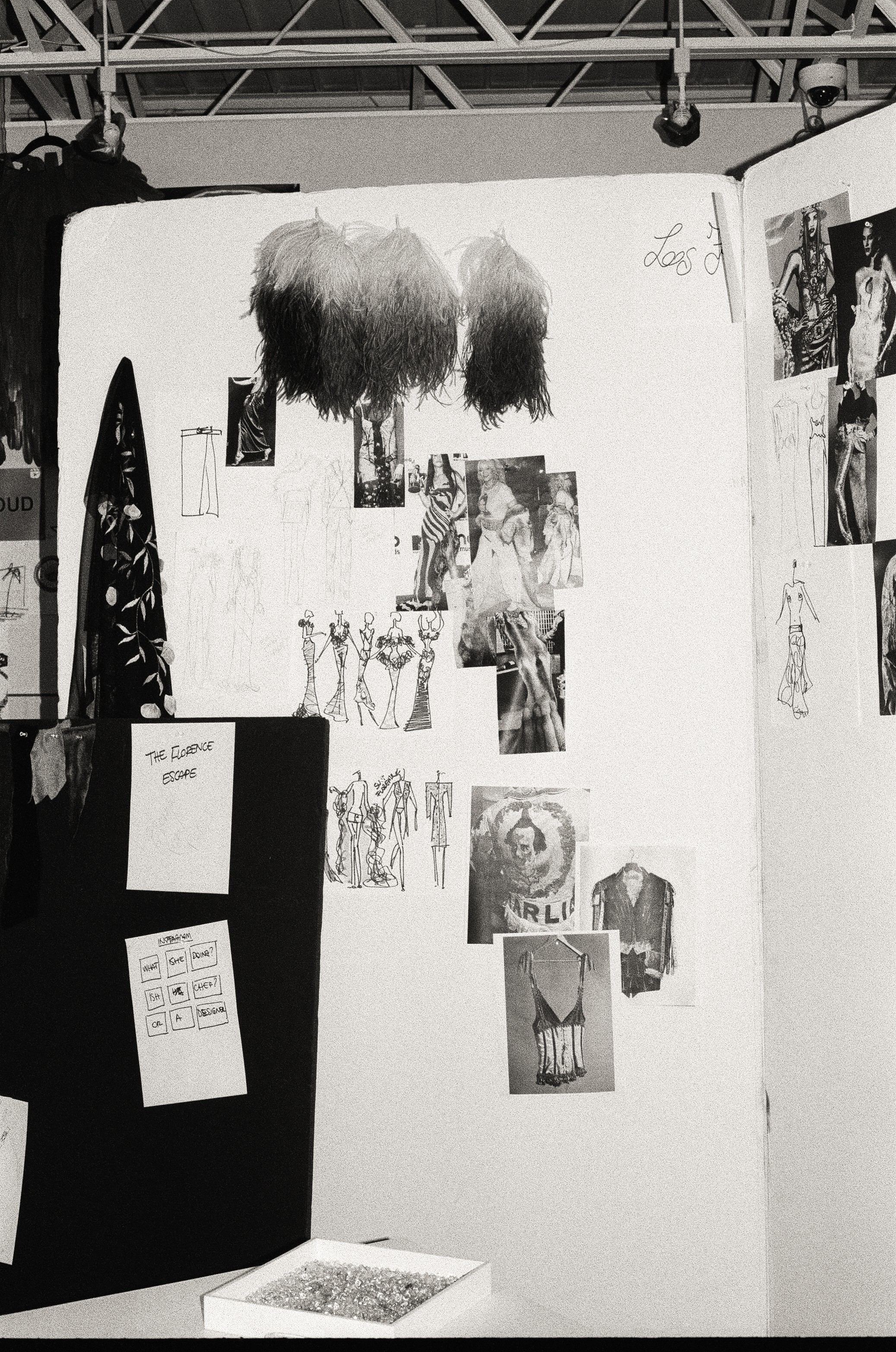
This confession offers a glimpse into a creative spirit that has been shaping his perspective since childhood. As a boy, Francalanci didn’t just play with Barbies; he designed for them. While others dressed their dolls in outfits from the box, Francalanci imagined his own ready-to-wear collections, draping them in unconventional looks fashioned from aluminum foil. Even then, his instinct for surrealist innovation was apparent. Today, Francalanci works out of his studio in DTLA, surrounded by taxidermy, statues of Chinese crested dogs, and racks of garments that reflect a deep passion for fashion history. Barefoot and with a cigarette poised between his fingers, Francalanci effortlessly dons a Napoleonic British shako hat, looking as though he’s ready to lead a regiment of avant-garde dreamers.
“The fashion industry is a sad industry,” he stated bluntly. “It’s obsessed with trends and profit, and that kills creativity.” For Francalanci, fashion isn’t about chasing numbers but creating something deeply personal. “I’m not creating a brand to sell—I’m creating a brand for myself. It’s my baby. I love the idea that Armani will die in his own company. The world is so obsessed with money and numbers, but they don’t understand the key to wealth: knowing how to spend it. What’s the point of having 15 pools when you can only swim in one?”
Francalanci’s vision extends beyond fashion.
Hosting intimate dinners in his studio to foster a sense of community, he strives to recreate the collaborative spirit of old-world ateliers. “I want people to enjoy my studio as much as I do,” he says. “It would be a shame not to use it in that way.”
Exploration and transformation are central to Francalanci’s process. Even objects he dislikes serve as opportunities to create something beautiful. One of his favorite exercises involves taking a product he loathes and reimagining it into something desirable—a process that fulfills his desire to build something beautiful from pure ashes.
His journey has been anything but conventional. At Central Saint Martins, when pressured to pursue a career at a major fashion house, Francalanci pushed back. Despite landing interviews at top labels, he chose to hone his craft in a small tailoring workshop in Naples, away from the spotlight. It wasn’t rebellion for its own sake but a bold, deliberate choice to turn away from the allure of glorified fashion houses and bet entirely on himself.
Francalanci then found himself in Paris after John Galliano personally requested him to join as an intern. Francalanci was tasked with the job of combing through Paris’ prolific antique shops and markets, hunting for objects that might spark inspiration for a collection. This experience honed his eye in searching for beauty, and instilled in him the ability to find creative potential in commonplace items most would overlook—lessons that still fuel his process and vision today. However, balancing work in Paris and his studies in London proved unsustainable, and he eventually made the difficult choice to leave Galliano’s team and complete his education.
Francalanci’s next step took him to Tom Ford, a brand he initially didn’t admire. Among the neutral tones and strict conformity of the studio, Francalanci’s bold stripes and distinctive jackets stood out. When Ford himself noticed one of Francalanci’s coats, he asked another higher ranked employee, “Who was the guy with that coat?” With polar antonymic styles, Francalanci and Ford developed a strong professional relationship that marked the beginning of greater responsibilities for Francalanci, eventually leading to his appointment as Head of Womenswear—a role that many would consider a pinnacle achievement.
For Francalanci, however, this position served as another jumping-off point, rather than a permanent landing spot. The boy who dressed Barbies couldn’t be confined to anyone else’s vision for long. He left Tom Ford to build his own brand, returning to the raw, authentic creativity that had driven him from the beginning. Along the way, he has found inspiration in unique figures, including Valerie Von Sobel, an 84-year-old artist and former girlfriend to Marlon Brando, whose vitality continues to shape Francalanci’s perspective.
“Authenticity is not a slogan,” he mused. “It’s an action.” For Francalanci, being true to oneself is not just a guiding principle but a lifelong practice. Whether reimagining detested objects, dancing to Whitney Houston in his studio, or challenging the fashion industry’s obsession with profit, Francalanci remains steadfast in his mission—a dreamer who dreams loudly enough for others to see while wide-awake.