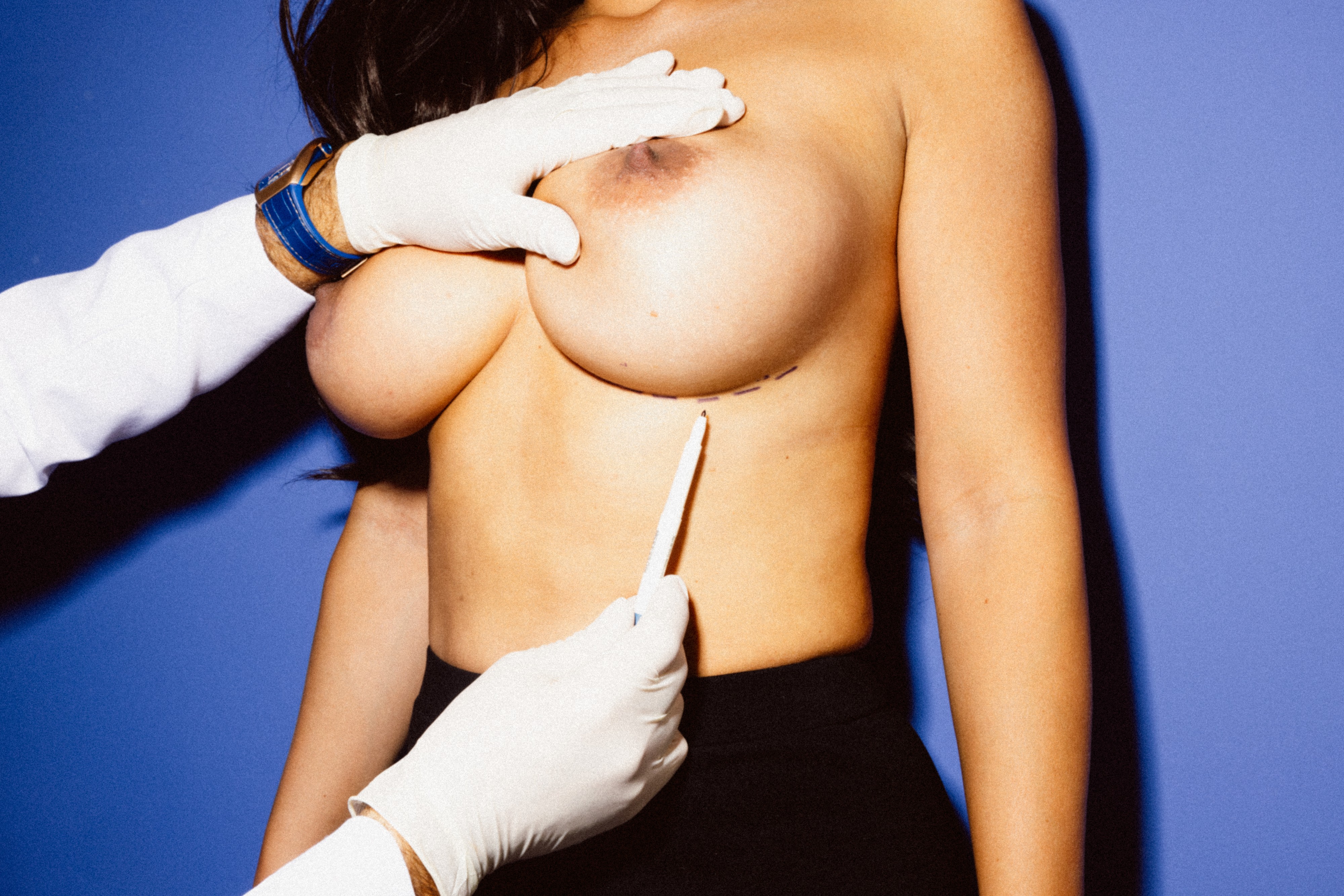
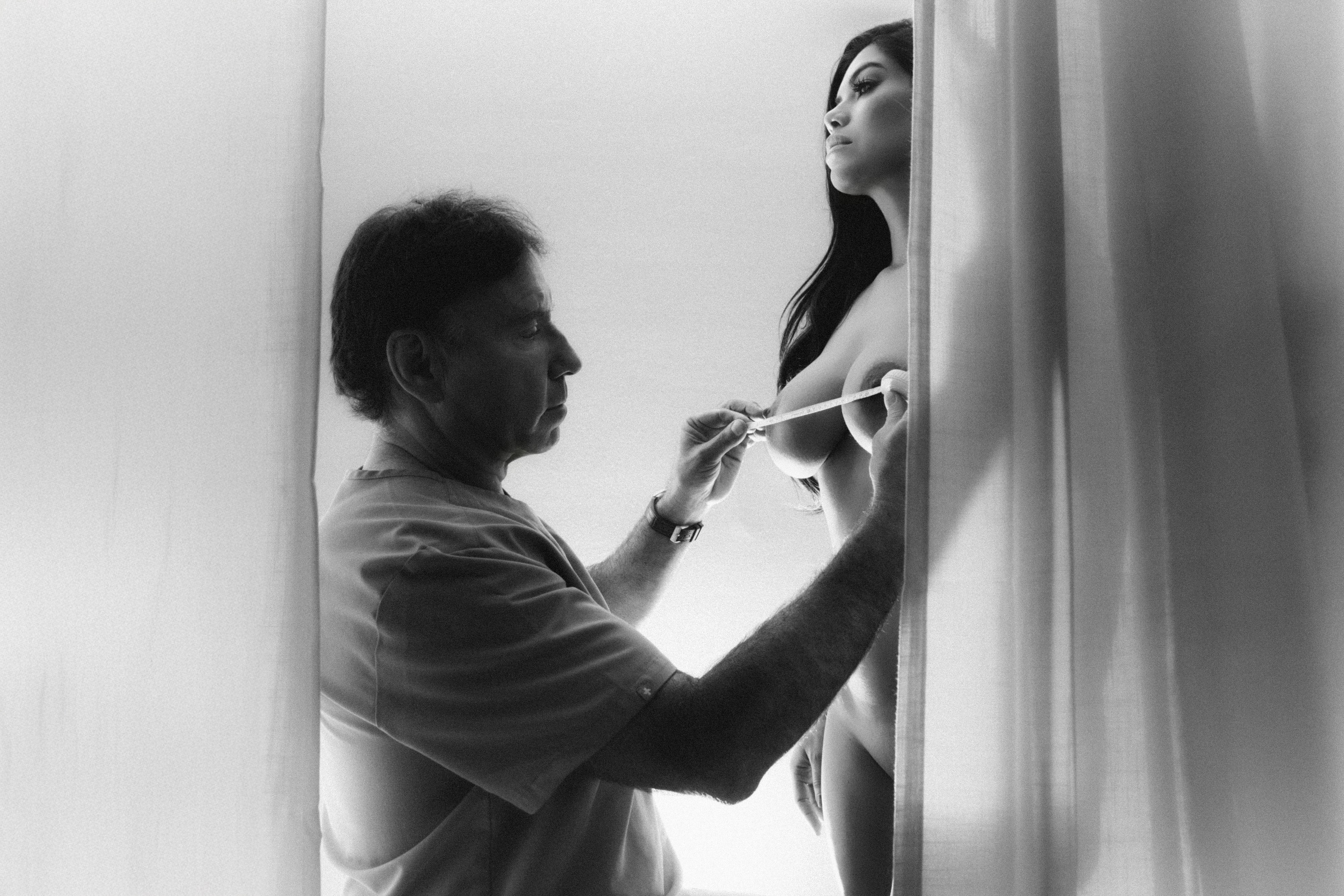
The Man Behind 20,458 Breasts
Written by Kimberly Hunt / Scroll to explore

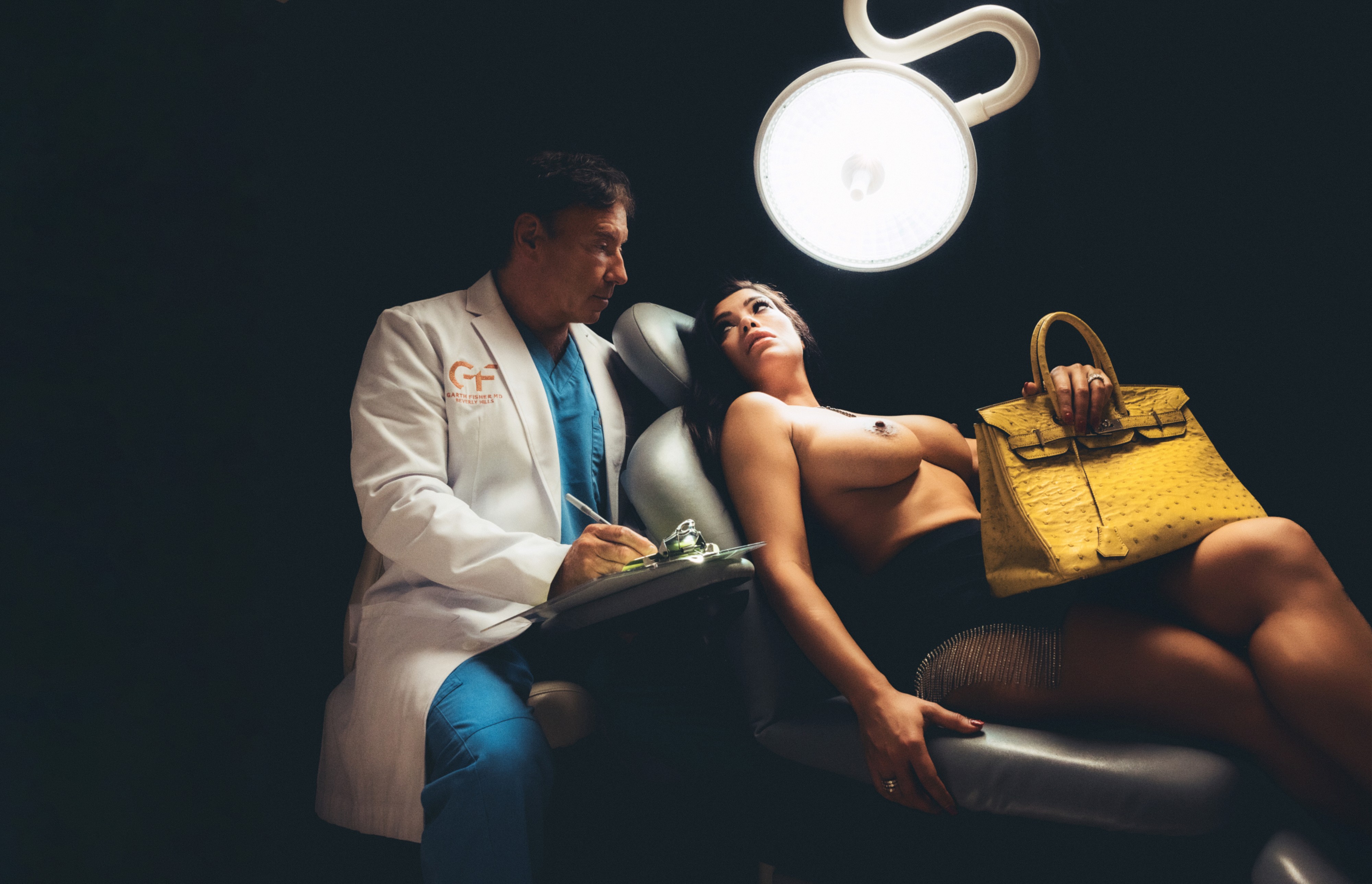
AS I sit cross-legged in Dr. Garth Fisher“s Beverly Hills office, I“m staring face-to-face with a man whose icy blue eyes have seen more breasts than Larry Flynt and Helmut Newton combined. We“re in his patient room, but this doesn“t feel like a medical facility—it“s more like a Hollywood version of ancient Rome, with a touch of excess. Of course, Fisher enlisted architect Melvin Grossman—the same man behind Caesars Palace in Vegas—to craft the barrel-vaulted ceiling, complete with that faux-sky finish. The room exudes a theatrical opulence, the kind that makes you wonder if you should have arrived in a toga. Despite the exuberant surroundings, Fisher himself is casual, dressed in a white T-shirt and blue jeans, giving off more "baseball dad" than "Beverly Hills royalty."
I should clarify: I“m not here to get a breast lift—that was last year. Yet, even with his favorite football team on TV and his only break in an otherwise non stop routine, he“s here, letting us into the life of the man behind the scalpel, behind some of the most recognizable knockers in the world, behind the 3 year long wait list, behind the popular show Extreme Makeover—I can barely call him any man, he“s the Michelangelo of nip, tuck, and tweak.
Fisher“s rise from the Mississippi backwoods to Beverly Hills reads like a Gus Van Sant movie. It begins not in marble offices or gleaming operating rooms but on the scuffed floors of a hospital where he worked as a janitor. Fisher recalls dating the head surgeon“s daughter, a detail sharp with boyish bravado. Dr. McCray, unimpressed by Fisher“s mop-wielding status, called him out one day. “Put that mop down,” McCray said. “Come watch me do surgery.”
“So I did. I put down my mop, went inside, and I saw him taking out a gallbladder. It was just amazing. The operating room, the bleeding—it looked exciting. And I said, ‘Shit, I want to be a surgeon.“ That was one of the biggest days of my life. That was it for me.”
His drive wasn“t an accident. As Fisher tells it, it was his way of distracting himself from the pain of his father“s disappearance. Born to an Air Force officer, his world came crashing down when his father“s plane was shot down during a covert mission in Vietnam. “It wasn“t grief that got to me,” Fisher says. “It was the not knowing. The absence of closure. It messes with you.”
Years of unanswered questions—rumors, conflicting reports from the government—left deep scars but also shaped his determination. “I learned how to disconnect,” he says. “I stayed busy. I worked, studied, and did whatever I could to keep my mind occupied.” That focus took him straight to medical school, where he hustled like a caffeine-fueled maniac. “We were on call every other night, surviving on coffee and adrenaline. Honestly, the best part of the day was brushing your teeth. It made you feel human for a second.”
After residency, the path was crystal clear: Los Angeles. Not because it was the city of dreams or whatever, but because where else are you going to find so many people ready to let you slice them open in the name of looking better? Fisher didn“t just refine his skills under world-class mentors—he dove in headfirst. He lived and breathed the craft, pushing himself to become the guy people trusted to reshape their looks.
It was 1994 when the call came—a moment that seemed destined to be marked by a dramatic pause. The phone rang, and on the other end was a voice so unmistakable it carried the weight of an empire.
“Is this Dr. Fisher?” the voice asked, confident and composed, like a man accustomed to always getting exactly what he wanted.
“Yes, this is Dr. Fisher,” came the reply.
“This is Hugh Hefner.” There was no need for introduction—Hugh Hefner“s tone was as much a signature as the iconic Playboy logo. “Did you do this girl“s breasts?” Hefner asked, referencing a recent Playmate.
Fisher confirmed, not realizing that this brief exchange was about to catapult him into a whole new realm. “Great,” Hefner said. “We“re going to send all our girls to you.”
And just like that, Fisher“s career launched into the stratosphere. Playmates began lining up, each carrying dreams of magazine covers and the promise of fame. But it didn“t stop there. Word of his skill slipped past the mansion gates and soon people were flying in from all over the world.. His scalpel wasn“t just a tool; it became an artist“s brush, shaping beauty standards plastered across the covers of Vogue, People, and more.
It“s not bravado; it“s the truth. Dr. Garth Fisher didn“t just adapt to the beauty zeitgeist—he defined it. His office became a haven for the bold and the beautiful, a space where the iconic were shaped and the legendary perfected. If you glanced at his client list today, it would look less like a medical roster and more like the guest list to Madonna“s Oscar after-party—A-list stars, iconic models, movie stars, wives of movie stars-the kind of names that rarely need introduction. And while NDAs keep most names under wraps, let“s just say the surprises are in who hasn“t been in his chair.
For Fisher, the operating room isn“t just where he works—it“s where he comes alive. The sterile lights, precision tools, and quiet intensity of the OR-it“s his creative zone. And he doesn“t just leave it behind when the day“s done. On sleepless nights, his mind replays surgeries like a highlight reel. It“s not self-criticism; it“s obsession. That obsession is what separates the great from the good, the artist from the technician. The kind of obsession that keeps you awake at night, revisiting your craft, dissecting every detail, and finding ways to make it even better. For Fisher, the operating room isn“t just a stage; it“s the epicenter of his world. His life“s work isn“t about chasing perfection—it“s about refusing to settle for anything less.